
Exploring How Quantum Research is Redefining Reality
Quantum Frontiers - Mapping the Unknown Dimensions of Physics.
The Rise of Quantum Curiosity
Quantum mechanics began as a response to mysteries that classical physics could not explain. The behavior of light, the structure of atoms, and the odd duality of particles acting as both waves and discrete entities demanded a new framework. The early 20th century ushered in thinkers like Max Planck, Niels Bohr, and Albert Einstein, whose contributions laid the foundation of quantum theory. What started as a series of puzzling observations evolved into one of the most successful and experimentally verified frameworks in science. Yet, the strangeness of quantum mechanics remains, with phenomena such as superposition and entanglement challenging human intuition. This rise of quantum curiosity continues today, as researchers probe deeper into its implications not just for physics but for philosophy, computation, and our view of reality itself.
Superposition - The Paradox of Many Realities
Superposition is one of the most mind-bending principles in quantum mechanics. It states that particles can exist in multiple states at once until they are observed or measured. This concept is not merely abstract but has been demonstrated through experiments such as the double-slit experiment, where particles create interference patterns even when fired one at a time. The paradox is that reality seems to exist in overlapping possibilities until it is collapsed into a definite outcome by observation. Philosophically, this has led to debates about the role of consciousness in measurement and whether reality is objective or shaped by observation. Superposition is also the cornerstone of quantum computing, allowing qubits to represent vastly more information than classical bits. By harnessing this principle, scientists aim to solve problems previously thought to be beyond human capacity.
Entanglement - The Universe’s Hidden Thread
Einstein once dismissed quantum entanglement as “spooky action at a distance,” yet decades of experiments have confirmed its reality. When two particles become entangled, the state of one instantly determines the state of the other, no matter how far apart they are. This challenges the traditional concept of locality, suggesting that at a fundamental level, the universe is more interconnected than we imagined. Entanglement is not only a conceptual curiosity but a practical tool. It underpins the emerging field of quantum communication, which promises unbreakable encryption, and quantum networks that could one day form the backbone of a global quantum internet. Entanglement reveals that reality operates with layers of complexity that resist simple cause-and-effect descriptions, pushing us to rethink the nature of space, time, and information.
Quantum Measurement and the Observer Problem
Perhaps no topic in quantum physics generates more debate than the measurement problem. If particles exist in multiple states until measured, what exactly counts as a measurement? Does a measuring device collapse the wave function, or is it the consciousness of an observer that finalizes reality? The Copenhagen Interpretation, many-worlds theory, and pilot-wave theory each offer different perspectives, none of which fully resolve the paradox. Experimental physics continues to refine the question, developing tests that push the boundaries of what counts as observation. This problem ties quantum mechanics to philosophy in profound ways, forcing us to ask whether the universe exists independently of observation or whether reality is an emergent process shaped by interaction.
Quantum Technology and Its Revolutionary Potential
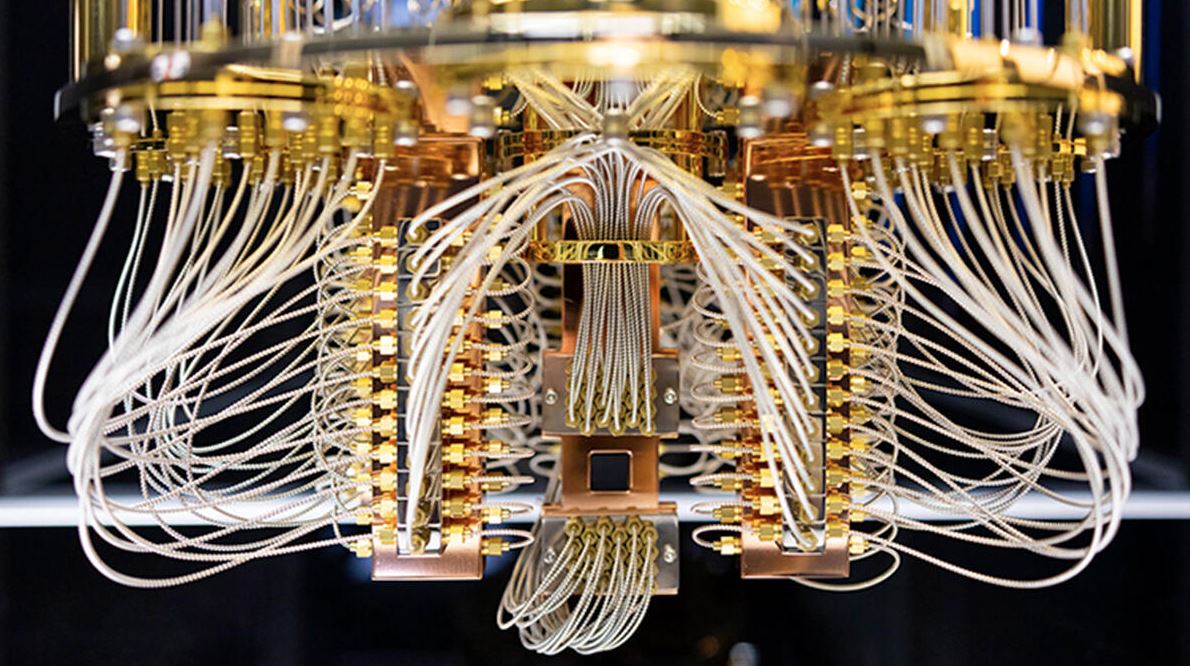
Quantum mechanics is no longer confined to blackboards and thought experiments. In laboratories around the world, its principles are being transformed into technology with disruptive potential. Quantum computers, though still in early stages, have already demonstrated their capacity to solve certain problems exponentially faster than classical machines. Quantum sensors are being developed to measure tiny variations in gravity, time, and magnetic fields with unprecedented accuracy, useful for everything from medicine to navigation. Quantum cryptography offers security systems immune to traditional hacking. The merging of physics and engineering in this way marks the beginning of a technological era shaped by quantum principles, much as electricity shaped the industrial world centuries ago.
The Philosophical Impact of Quantum Research
The quantum world forces us to confront questions about determinism, reality, and human knowledge. If the future is not fully determined but exists as a set of probabilities, how does that reshape our understanding of causality? If entangled particles are linked across space, does this imply that separateness is an illusion? Philosophers and physicists alike grapple with these issues, suggesting that quantum mechanics is not only a scientific revolution but a philosophical one. It blurs the boundaries between physics and metaphysics, reminding us that science is not merely about equations but about the meanings and assumptions we carry about the universe.
Bridging Quantum Physics and Everyday Life
At first glance, quantum mechanics may seem distant from daily experience. Yet, its effects are already embedded in technologies people use every day. Semiconductors, lasers, and even the GPS systems in smartphones rely on quantum principles. The future promises even more direct applications, from quantum-secure communications to faster drug discovery through quantum simulations. By tracing the thread from abstract experiments to practical tools, we see how deeply quantum mechanics is already woven into the fabric of modern life. This bridge between theory and practice ensures that quantum physics will continue to shape not only science but also society.
The Road Ahead: Infinite Possibilities
Quantum physics remains a field defined by both clarity and mystery. While its equations predict outcomes with extraordinary accuracy, the meaning of those outcomes remains unsettled. Future research may resolve some of the paradoxes, or it may reveal deeper mysteries still hidden within the quantum fabric of reality. Large-scale projects such as the construction of quantum networks, next-generation colliders, and space-based quantum experiments promise to expand our horizons. For now, quantum mechanics remains a frontier, both in the laboratory and in human imagination. Its study challenges us not only to refine our science but to rethink our place in a universe that is stranger, subtler, and more interconnected than we ever imagined.