
Entanglement Highways - Building the Next Frontier of Quantum Networks
How physics experiments are turning fragile qubits into vehicles of global communication.
From Classical Wires to Quantum Pathways
The history of communication has been a story of overcoming distance. Copper wires carried telegraph clicks across continents, fiber optics transmitted pulses of light under oceans, and satellites now bounce signals across the globe. But the rise of quantum information science introduces a radically different approach. Instead of encoding information in classical bits, researchers experiment with qubits, entities governed by superposition and entanglement. These fragile states cannot simply be copied and amplified like conventional signals, which forces scientists to rethink the architecture of communication itself. Experiments in physics labs across the world are now laying the foundations for what some call entanglement highways, the quantum equivalent of global networks.
The Strange Logic of Entanglement
Entanglement is not merely a curious byproduct of quantum theory but the central resource that quantum networks aim to distribute. When two particles are entangled, their properties remain correlated no matter how far apart they are separated. Measuring one particle instantly defines the state of the other, a phenomenon Einstein famously described as "spooky action at a distance." In modern laboratories, entanglement is generated by carefully tuned laser pulses or by spontaneous emissions inside quantum dots and trapped ions. Once created, these pairs serve as the backbone of secure communication protocols and distributed quantum computing. Experimentalists treat entanglement not as a philosophical puzzle but as a commodity to be produced, transported, and consumed.
Quantum Repeaters and the Battle Against Decoherence
One of the greatest challenges in constructing a quantum network is decoherence, the gradual loss of quantum information due to environmental noise. In classical systems, repeaters boost weakened signals along their journey. For quantum systems, amplification is impossible because measurement destroys the delicate state. Instead, physicists design quantum repeaters, devices that extend entanglement across long distances by entanglement swapping and purification. Each step in this chain must preserve fidelity while suppressing errors, a task that has fueled decades of experimental innovation. Superconducting cavities, atomic ensembles, and rare-earth doped crystals have all been tested as candidates for quantum memories that could make repeaters viable.
The Role of Satellite-Based Experiments
Laboratories are not the only stage where these experiments unfold. In 2017, a Chinese satellite named Micius demonstrated entanglement distribution across more than 1,200 kilometers, setting a new benchmark for global quantum communication. By operating in space, the photons traveled mostly through vacuum rather than turbulent air or lossy fibers, which preserved their coherence. The experiment showed that large-scale quantum networks will likely combine terrestrial fiber systems with space-based links, creating hybrid architectures. Today, new missions in Europe, North America, and Asia are preparing their own satellites, each aiming to turn proof-of-principle experiments into robust platforms for global-scale entanglement distribution.
Experimental Platforms - From Superconductors to Photons
Quantum networking experiments are not confined to one type of physical system. Photons remain the natural choice for carrying information, since they can travel long distances with minimal interaction. But generating entangled photons that are both bright and stable requires sophisticated engineering. Semiconductor quantum dots, parametric down-conversion crystals, and integrated photonic circuits each offer unique advantages. Meanwhile, matter-based systems like trapped ions and superconducting qubits excel at storing and manipulating quantum states locally. The grand challenge is to interface these platforms: to connect solid-state qubits with optical photons, to bridge superconducting circuits with spin ensembles, and to integrate each into scalable architectures.
Security and the Dream of the Quantum Internet
The most immediate application of these experimental networks is secure communication. Quantum key distribution (QKD) leverages the no-cloning theorem to guarantee that any eavesdropping attempt leaves detectable traces. Unlike classical encryption schemes, which may one day fall to advances in computational power, QKD offers security rooted in the laws of physics. Yet the ultimate ambition extends far beyond cryptography. Researchers envision a quantum internet that links quantum computers, sensors, and clocks across the globe. Such a network could synchronize navigation systems with unprecedented accuracy, enable distributed quantum simulations of complex molecules, and open entirely new scientific paradigms.
The Human Side of Quantum Experiments
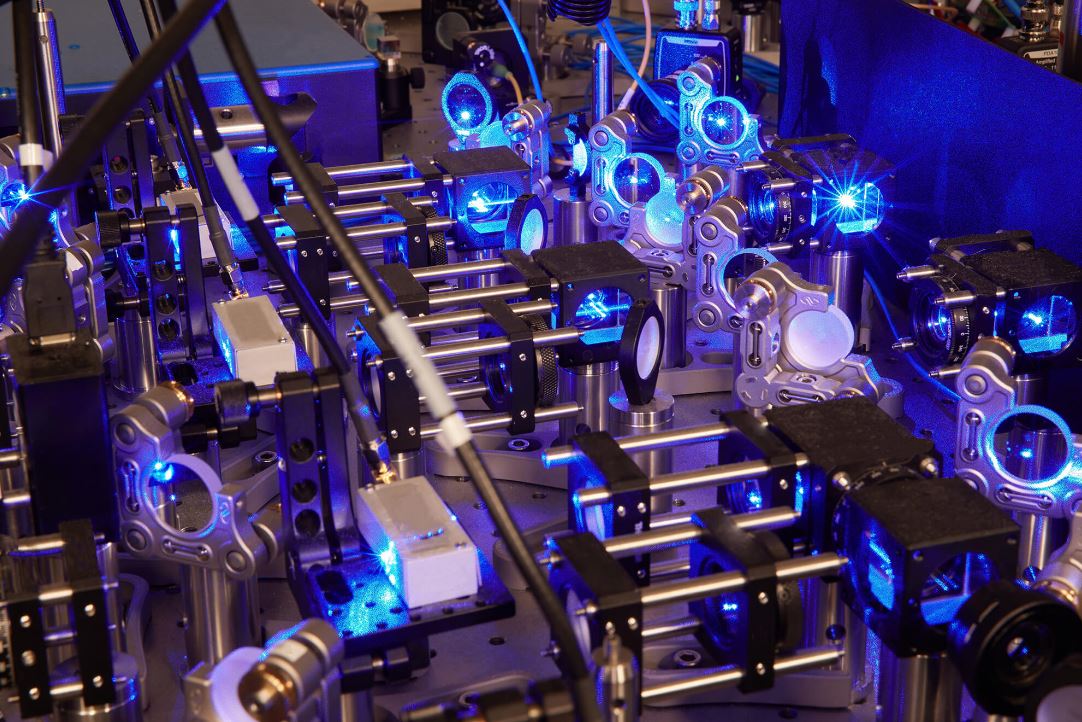
Behind every successful entanglement distribution or repeater prototype lies years of meticulous trial and error. Quantum experiments demand extraordinary precision: temperatures near absolute zero, ultra-high vacuum chambers, and lasers stabilized to frequencies finer than the width of an atom. Graduate students spend long nights aligning optical fibers by fractions of a micron, while postdoctoral researchers debug superconducting circuits that are sensitive to stray magnetic fields from passing elevators. What unites them is a shared belief that their work is not just academic curiosity but part of a generational leap in communication technology.
Looking Toward a Quantum Future
The dream of a global quantum network is not guaranteed. Technical barriers remain, and large-scale deployment will require engineering solutions as much as theoretical breakthroughs. Yet the trajectory is clear. Just as early telegraph experiments once seemed impractical, today’s quantum trials foreshadow infrastructures that may shape the next century. Entanglement highways are no longer a metaphor confined to textbooks. They are being built piece by piece, in laboratories, observatories, and satellites, each experiment pushing the boundary of what physics allows. The future of communication may not only be faster or more secure but fundamentally different, shaped by the peculiar logic of the quantum world.